

Modelling & Preclinical Test
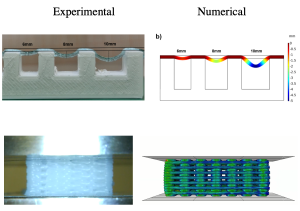
We develop computational models to predict key bioprinting processes, including extrusion dynamics, bioink printability, and the structural properties of printed constructs. These predictive tools support process optimization, improve reproducibility, and guide the design of reliable and functional tissue engineering strategies.
-
- Di Gravina, G. M., Bari, E., Croce, S., Scocozza, F., Pisani, S., Conti, B., … & Conti, M. (2023). Design and development of a hepatic lyo-dECM powder as a biomimetic component for 3D-printable hybrid hydrogels. Biomedical Materials, 19(1), 015005.
- Scocozza, F., Di Gravina, G. M., Bari, E., Auricchio, F., Torre, M. L., & Conti, M. (2023). Prediction of the mechanical response of a 3D (bio)printed hybrid scaffold for improving bone tissue regeneration by structural finite element analysis. Journal of the Mechanical Behavior of Biomedical Materials, 142, 105822.
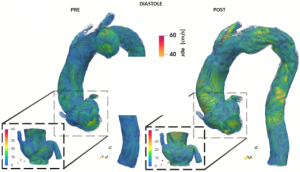
We develop and apply computational fluid dynamics methodologies to simulate patient-specific vascular hemodynamics. By integrating medical imaging with advanced numerical modeling, we generate predictive insights into blood flow and pressure dynamics, supporting the design and evaluation of cardiovascular interventions

We develop a quantitatively characterized FRESH (Freeform Reversible Embedding of Suspended Hydrogels) bioprinting workflow to fabricate vessel-like constructs for device-oriented testing. By combining process optimization, non-destructive micro-CT imaging, and mechanical characterization, this approach enables reproducible construct geometry and consistent mechanical behavior. The platform supports sterile fabrication, preliminary cellularization, controlled perfusion, and intraluminal stent deployment, providing a benchmark framework for evaluating endovascular devices and vessel–device interactions in vitro.